


-
Solution for Remote Monitoring System of Biomass Pellet Production Line
2025-12-05 11:23:21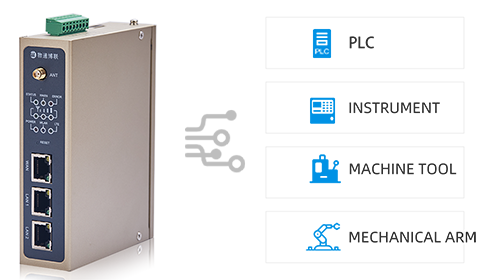
With the continuous development of the global economy, the issue of energy shortage has become increasingly severe.
To rationally utilize energy, reduce environmental pollution, and protect the natural environment, the development and utilization of new energy sources and technologies have garnered increasing attention. Biomass energy refers to the energy formed by the conversion of solar energy in nature through plants, such as straw, sawdust, and fruit shells, which can be processed into solid shaped fuels through a biomass pellet production line, providing stable energy for industrial production.The biomass pellet production line is an automated production line that includes a series of processes such as crushing, mixing, pelleting, drying, cooling, screening, and packaging.
Equipment on the production line, such as crushers, dryers, pelletizers, and packaging machines, achieve automated production through the control system PLC, ensuring appropriate pellet size and moisture content, with high production efficiency and a rich set of control instructions. This has made it popular among many feed mills and equipment manufacturers.In this context, WideIOT offers a remote monitoring and operation platform for equipment connected to the production line PLC, enabling data collection and visual monitoring of material weight, temperature, humidity, pressure, and other parameters on the production line.
Enterprises can obtain real-time information on equipment operational status, production progress, alarm data, energy consumption levels, and production efficiency, and view and analyze this data on a large data screen. This reduces equipment downtime due to failures, enhances production controllability, and achieves intelligent production.When production anomalies are detected, managers receive alarm information via WeChat, SMS, or email, allowing them to view the faulty equipment and alarm data. They can then remotely control and maintain the PLC using a smartphone or computer, performing operations such as remote start/stop, remote programming and debugging, and remote program uploading and downloading. This enables timely management, control, and repair of faults, ensuring a safe and orderly production environment and timely order delivery.

 Go Top