


-
Selection of Industrial IoT Gateways
2025-12-15 10:51:11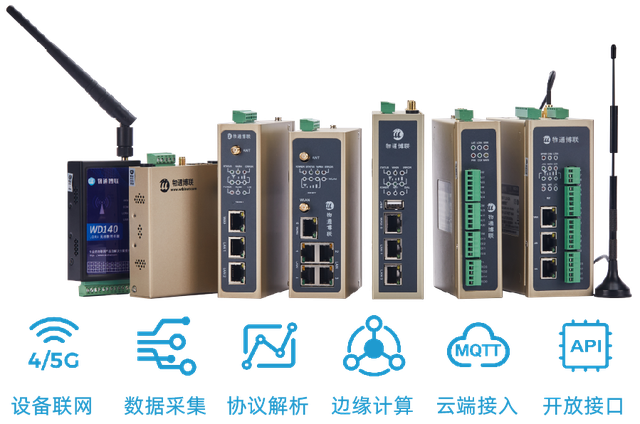
WideIOT introduces industrial IoT gateways that possess the capability to collect data from devices such as PLCs, sensors, CNC machines, industrial robots, and instrumentation.
These gateways enable protocol parsing and edge computing. Additionally, they support various communication methods for internet access, including 5G/4G, WIFI, and Ethernet, providing solutions tailored to the IoT needs of different scenarios and facilitating the digital transformation of enterprises.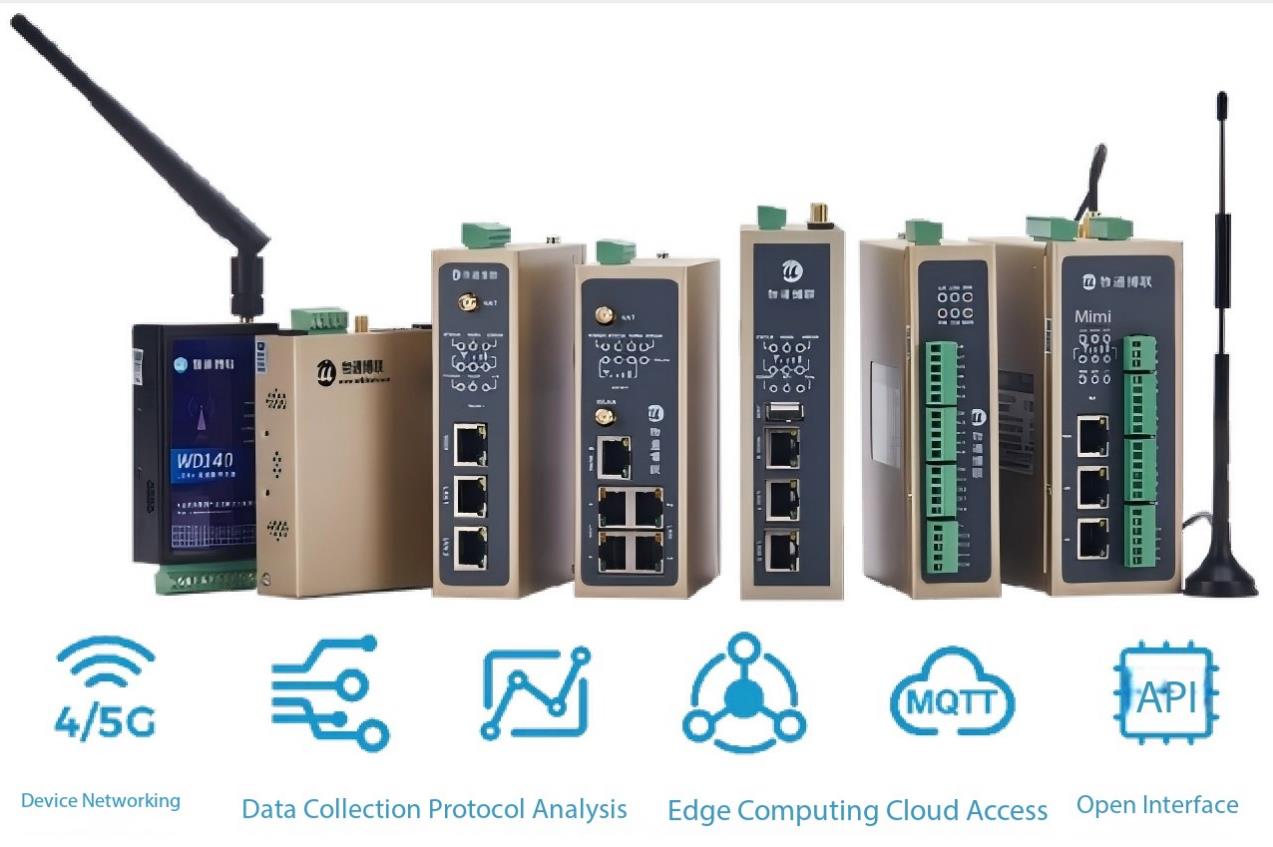
-
Ethernet Networks
By connecting industrial IoT gateways and industrial devices through network ports, real-time communication between devices and local upper computers can be achieved. This method is suitable for scenarios requiring high speed and low latency, offering advantages such as stable transmission and simple operation. However, drawbacks include long construction periods, high labor costs, and difficulties in troubleshooting.
Ethernet (wired networks) represent a highly common data transmission communication method. -
WIFI Networks
This approach offers advantages such as simple construction and rapid configuration. Nevertheless, it is susceptible to interference and requires advanced networking techniques.
Utilizing the WIFI internet access function of industrial IoT gateways enables localized wireless communication among devices, particularly suitable for small to medium-sized workshop environments where devices are clustered. -
5G/4G Networks
This method provides excellent flexibility and eliminates the need for construction wiring, resulting in lower costs. However, considerations must be given to issues such as operator networks and regular payment of fees.
By enabling 5G/4G internet access through industrial IoT gateways, remote monitoring of distributed devices can be achieved, making it ideal for scenarios involving multiple factories or overseas facilities. -
LoRa Networks
The long-distance and low-power advantages of LoRa make it well-suited for remote monitoring needs in nearby factories, such as in agriculture and power transmission and distribution sectors. It also offers the benefits of wireless communication. Nonetheless, it is more prone to interference.
-

 Go Top